Montessori Pre-primary Teaching
Montessori Pre-Primary teaching is a specialized field that focuses on the educational methods developed by Maria Montessori, emphasizing independence, freedom within limits, and respect for a child's natural psychological, physical, and social development. Here's a brief overview:
Montessori Pre-Primary teaching involves:
Child-Centric Approach: Montessori education centers around the child. Teachers observe each child's interests and tendencies, tailoring activities and lessons accordingly.
Prepared Environment: Classrooms are carefully prepared with materials that encourage exploration and learning. These materials are designed to be self-correcting, allowing children to learn through hands-on experience.
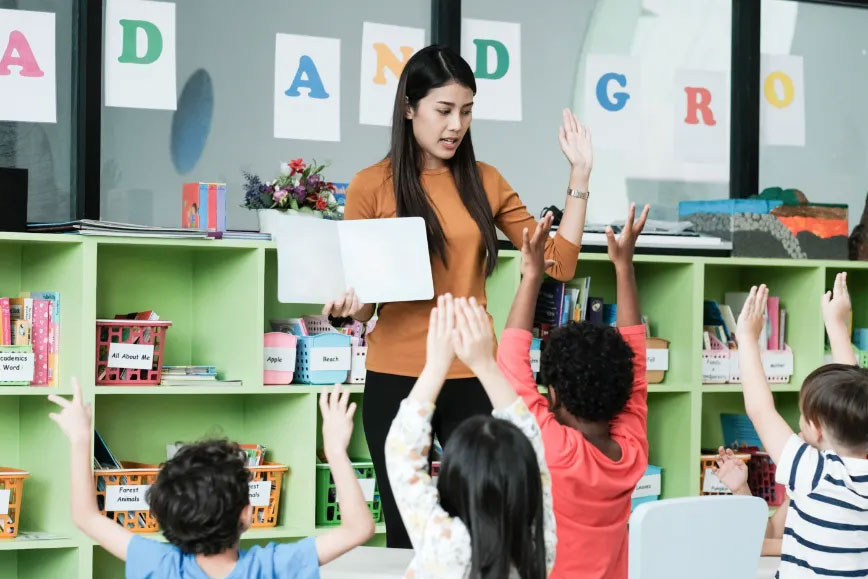
Hands-On Learning: Children engage in practical, hands-on activities that promote cognitive, social, and physical development. Activities often involve sensory experiences and fine motor skill development.
Mixed-Age Groups: Montessori classrooms typically have mixed-age groups, allowing younger children to learn from older peers and older children to reinforce their knowledge by teaching younger ones.
Independence and Self-Discipline: Montessori education nurtures independence and self-discipline. Children are encouraged to make choices within a structured environment, fostering a sense of responsibility for their actions.
Individualized Learning: Lessons are tailored to individual learning styles and paces, allowing each child to progress at their own rate.
Holistic Development: Montessori education focuses on the holistic development of the child, including cognitive, social, emotional, and physical aspects. Pre-primary Montessori teachers play a vital role in creating an environment where children can thrive intellectually, emotionally, and socially. They guide students in their exploration, provide gentle encouragement, and foster a love for learning that lasts a lifetime.
